
If you’ve ever watched your beloved dog refuse a meal, scratch incessantly after eating, or leave you an unwelcome surprise on the carpet at 3 AM, you know exactly how stressful a sensitive stomach can be — for both of you. You’re not alone. According to the American Veterinary Medical Association (AVMA), digestive issues are among the top five reasons pet parents visit veterinarians each year.
Choosing the best dog food for sensitive stomach issues isn’t just about grabbing the bag with the prettiest packaging. It’s about understanding your dog’s unique biology, identifying trigger ingredients, and selecting healthy food for dogs that supports gut health from the inside out.
In this comprehensive guide, you’ll learn:
- How to spot the signs of a sensitive stomach
- What ingredients to look for (and avoid)
- Expert-recommended brands and feeding strategies
- Real-life case studies of dogs who transformed their health
- Pros, cons, and answers to the most common FAQs
Let’s dive into everything you need to know to give your pup the nutritional food for dogs they truly deserve.
What is a Sensitive Stomach in Dogs?

A “sensitive stomach” is a catch-all term for chronic digestive discomfort that isn’t caused by a serious underlying disease. Unlike acute illness, sensitivity is typically ongoing and tied directly to diet.
Common Symptoms of a Sensitive Stomach
Keep an eye out for these red flags:
- Frequent vomiting (especially after meals)
- Loose stools or chronic diarrhea
- Excessive gas and bloating
- Gurgling stomach sounds
- Lack of appetite or picky eating
- Itchy skin or ear infections (often linked to food sensitivities)
- Lethargy after eating
If your dog shows two or more of these symptoms consistently, it’s time to evaluate their diet — and possibly consult your veterinarian.
Causes of Digestive Sensitivities in dogs

There are several culprits behind a finicky belly:
- Food allergies or intolerances (chicken, beef, dairy, soy, and wheat are top offenders)
- Sudden diet changes that disrupt gut flora
- Low-quality fillers like corn syrup, artificial preservatives, and by-products
- Stress and anxiety (yes, dogs get nervous tummies too!)
- Underlying conditions like Inflammatory Bowel Disease (IBD), pancreatitis, or parasites
Why the Right Food Matters More Than You Think
A dog’s gut is home to trillions of bacteria — collectively called the microbiome — that influence everything from immunity to mood. Feeding your dog the wrong food doesn’t just cause discomfort; it can lead to long-term health issues.
A 2021 study published in the Journal of Animal Science found that dogs fed highly digestible, limited-ingredient diets showed a 38% improvement in stool quality and gut microbiome diversity within just six weeks.
In short: the right diet doesn’t just soothe symptoms — it heals from within.
Key Ingredients to Look for in the Best Dog Food for Sensitive Stomach
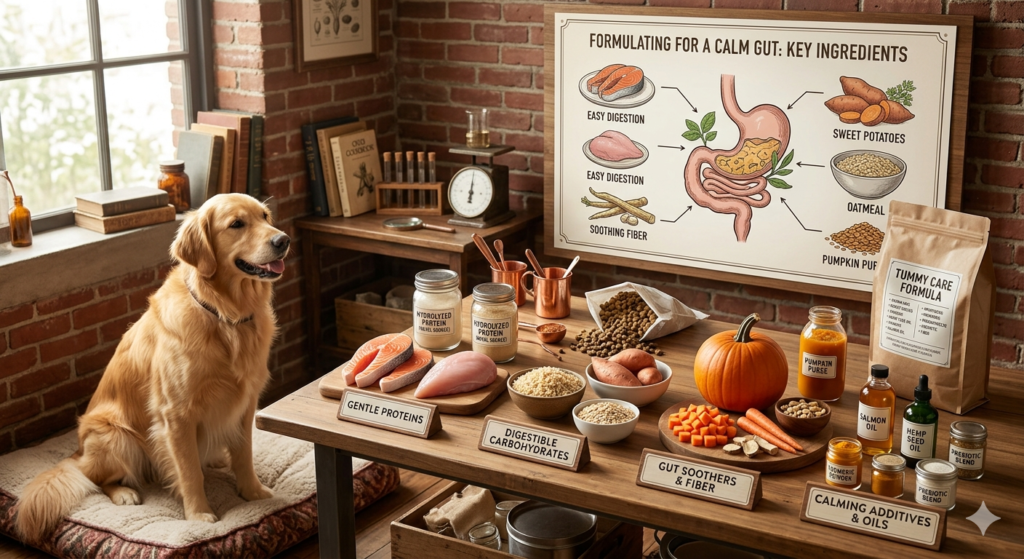
When scanning labels, prioritize these gut-friendly components:
1. Single-Source, Novel Proteins
Look for proteins your dog hasn’t been exposed to before, such as:
- Lamb
- Duck
- Venison
- Salmon
- Rabbit
Novel proteins reduce the likelihood of triggering an allergic response.
2. Easily Digestible Carbohydrates
Skip corn, wheat, and soy. Instead, choose:
- Sweet potatoes
- Pumpkin (a fiber powerhouse!)
- Brown rice
- Oatmeal
3. Prebiotics and Probiotics
These promote a healthy gut microbiome. Look for:
- Chicory root (a natural prebiotic)
- Live probiotic cultures like Lactobacillus acidophilus
- Fermented vegetables
4. Omega-3 Fatty Acids
Omega-3s reduce inflammation in the gut lining. Sources include:
- Fish oil
- Flaxseed
- Salmon meal
5. Limited Ingredient Formulas (LID)
The fewer ingredients, the easier it is to pinpoint what works (and what doesn’t). LID foods are gold-standard for sensitive dogs.
Ingredients to Avoid at All Costs
Just as important as what to feed is what to avoid:
- Artificial colors, flavors, and preservatives (BHA, BHT, ethoxyquin)
- Meat by-products (vague and often low-quality)
- Corn, wheat, and soy (common allergens)
- High-fat ingredients (can trigger pancreatitis)
- Dairy (most dogs are lactose intolerant)
- Excessive sodium or sugar
Pro tip: If you can’t pronounce it, your dog probably shouldn’t eat it.
Top Recommended Dog Foods for Sensitive Stomachs
Based on veterinary recommendations, ingredient quality, and customer reviews, here are some standout brands:
1. Hill’s Science Diet Sensitive Stomach & Skin
- Best for: Dogs with combined skin and digestive issues
- Key features: Prebiotic fiber, vitamin E, omega-6s
- Learn more on the Hill’s official website (dofollow)
2. Royal Canin Veterinary Diet Gastrointestinal
- Best for: Severe digestive cases (vet prescription required)
- Key features: Highly digestible proteins, balanced fiber blend
3. Purina Pro Plan Sensitive Skin & Stomach
- Best for: Budget-conscious families
- Key features: Salmon as the first ingredient, probiotics, no corn or wheat
4. Wellness CORE Digestive Health
- Best for: Holistic, grain-inclusive nutrition
- Key features: Wholesome grains, probiotics, and digestive enzymes
5. The Honest Kitchen Limited Ingredient
- Best for: Human-grade, dehydrated meals
- Key features: Whole-food ingredients, no GMOs or preservatives
Real-Life Case Studies: From Sick to Thriving
Case Study 1 – Bella the Beagle
Bella, a 5-year-old beagle, suffered from chronic vomiting and itchy skin for over a year. After multiple vet visits, her owner switched her to a limited-ingredient salmon and sweet potato formula. Within 30 days:
- Vomiting stopped completely
- Coat became shinier
- Energy levels doubled
Case Study 2 – Max the Mastiff
Max, a 90-pound gentle giant, dealt with severe gas and loose stools. His vet recommended a prescription gastrointestinal diet combined with daily probiotics. Within 8 weeks, his stool firmness improved by 80%, and his bloating disappeared.
These stories prove that the right nutritional food for dogs can be life-changing — not just symptom management.
How to Transition Your Dog to a New Food (Without Upsetting Their Stomach)
Switching foods abruptly is one of the biggest mistakes pet parents make. Follow this 7-day transition plan:
| Day | Old Food | New Food |
| 1-2 | 75% | 25% |
| 3-4 | 50% | 50% |
| 5-6 | 25% | 75% |
| 7+ | 0% | 100% |
If symptoms worsen at any point, slow down or revert to the previous ratio.
Pros and Cons of Sensitive Stomach Dog Foods
Pros
- Reduces digestive discomfort and skin issues
- Often includes premium, high-quality ingredients
- Improves stool quality and energy
- Supports long-term gut health
Cons
- Typically more expensive than standard kibble
- May require trial and error to find the right match
- Some require veterinary prescriptions
- Limited flavor variety for picky eaters
Expert Tips for Supporting Your Dog’s Digestive Health
- Feed smaller, more frequent meals — easier on the stomach.
- Add a daily probiotic (vet-approved).
- Avoid table scraps — even small bites can derail progress.
- Provide fresh, filtered water at all times.
- Track symptoms in a food journal to identify trigger ingredients.
- Use slow-feeder bowls to prevent gulping and bloating.
Frequently Asked Questions (FAQs)
Q1. How long does it take to see improvement after switching to sensitive stomach dog food?
Most dogs show improvement within 2 to 4 weeks, though some severe cases may take up to 8 weeks for full results.
Q2. Is grain-free food better for sensitive stomachs?
Not necessarily. The FDA has linked some grain-free diets to heart issues (DCM). Whole grains like oatmeal and brown rice can actually be beneficial.
Q3. Can puppies have sensitive stomachs too?
Yes! Puppies are especially vulnerable. Choose puppy-formulated sensitive stomach foods with DHA for brain development.
Q4. Should I cook homemade food for my dog?
Homemade meals can work — but only with a vet nutritionist’s guidance to ensure balanced nutrition.
Q5. How do I know if my dog is allergic vs. just sensitive?
Allergies cause immune responses (itching, hives, ear infections), while sensitivities affect mainly the digestive system. An elimination diet is the gold standard for diagnosis.
Your Dog Deserves the Best
Choosing the best dog food for sensitive stomach issues is one of the most loving decisions you can make as a pet parent. The right food doesn’t just fill a bowl — it transforms lives. From soothing chronic gas to restoring shiny coats and boundless energy, healthy food for dogs is the foundation of a vibrant life.
Remember the essentials:
- Choose limited-ingredient, novel-protein diets
- Prioritize prebiotics, probiotics, and omega-3s
- Avoid artificial additives and common allergens
- Transition gradually and monitor closely
- Consult your veterinarian for personalized advice
Your dog can’t read labels — but you can. And every meal you serve is a step toward their healthier, happier future.
Leave a Reply