
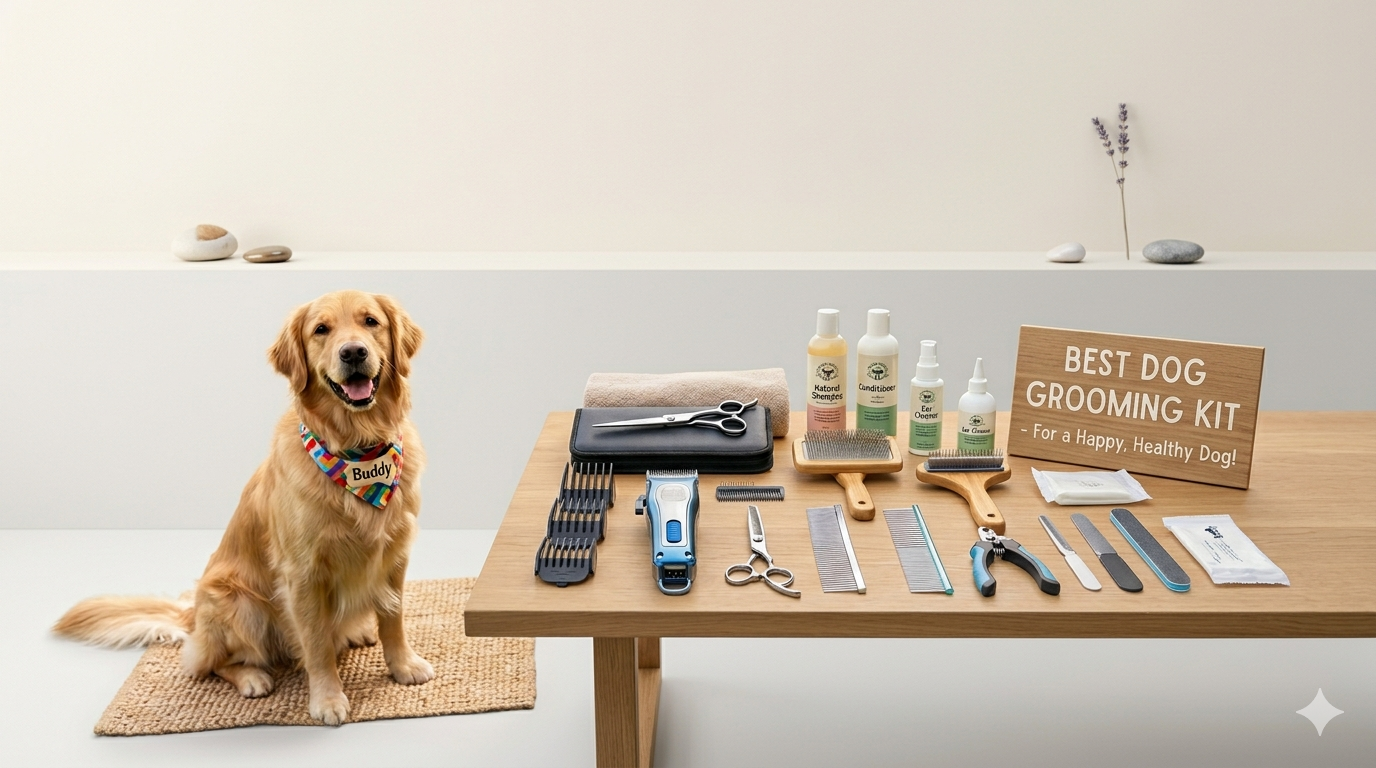
If you’ve ever paid for a professional grooming appointment and watched the bill climb before you even got to the tip line, you already understand the appeal of doing it yourself. Add in long wait times for appointments, dogs who hate car rides, and a shedding season that seems to last six months instead of six weeks, and it’s easy to see why so many U.S. pet owners are searching for the they can find.
The problem is that “best” gets thrown around a lot in product descriptions, and not every kit lives up to it. Some clippers struggle the moment they hit a thick undercoat. Others are so loud and buzzy that nervous dogs bolt at the sound. And a few “complete” bundles fall apart – literally – after a handful of uses.
This guide is here to cut through that noise (pun intended). We’ll walk through the features that actually matter, the real difference between a professional dog grooming kit and the best at-home dog grooming kit, honest pros and cons of DIY grooming, common mistakes to avoid, a few real-world scenarios, and answers to the questions pet owners ask most. By the end, you’ll know exactly what to look for – and what to skip – before you spend your money.
What’s Inside a Dog Grooming Kit (and Why It’s Worth Having One)
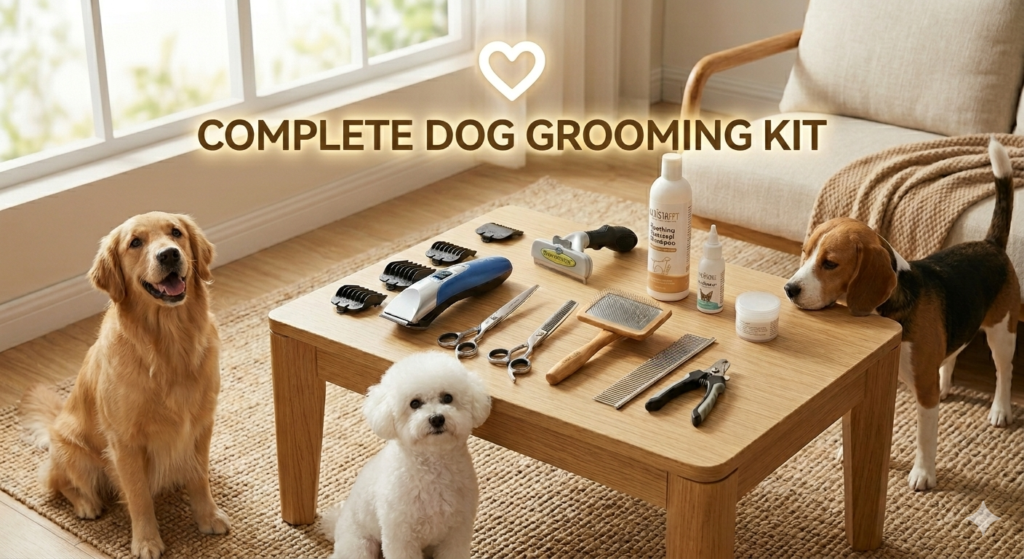
At a basic level, a dog grooming kit bundles together the tools you need to handle most of your dog’s coat and nail care at home. A solid kit usually includes:
- An electric clipper or trimmer
- A set of attachment guide combs for different coat lengths
- Smaller detail trimmers for paws, ears, and sanitary areas
- Nail clippers or a nail grinder
- A grooming brush, comb, or deshedding tool
- A cleaning brush, blade oil, and a storage case
The appeal isn’t just convenience – it’s the math. Professional grooming costs in many U.S. cities add up quickly when you factor in regular visits every four to six weeks, plus tips and add-ons. For owners of double-coated or fast-growing breeds, that can mean a noticeable chunk of the household pet budget every year.
That’s exactly why interest in the best at-home dog grooming kit has grown so much. A one-time purchase that pays for itself within a few sessions, reduces the stress of unfamiliar environments for anxious dogs, and gives you full control over the tools and products touching your pet’s skin is a hard combination to beat.
Key Features That Define the Best Dog Grooming Kit

Here’s where most buying decisions go right – or wrong. These are the features worth paying attention to before you check out.
1. Motor Power and Type
Dog clippers generally rely on one of two motor types. Rotary motors are lighter, quieter, and run cooler, which makes them a good fit for fine or short coats and smaller breeds. Pivot (sometimes called “magnetic”) motors deliver more torque and cutting power, making them better suited to thick, dense, or double coats – think Huskies, Golden Retrievers, and Shepherds – though they tend to run a little louder and heavier in the hand.
2. Blade Quality and Adjustability
Stainless steel or titanium-coated blades hold their edge longer and resist rust better than basic carbon steel. Just as important is adjustability: kits with a built-in lever that shifts between several cutting lengths give you far more flexibility than relying solely on snap-on guard combs.
3. Noise and Vibration Levels
This is one of the most overlooked features – and often the deciding factor in whether a dog tolerates grooming at all. Many household clippers run somewhere between the volume of a normal conversation and a vacuum cleaner. If your dog is sound-sensitive, a quieter, low-vibration motor can be the difference between a calm session and a stressful one.
4. Cordless vs. Corded Operation
Cordless kits give you freedom to move around legs, tails, and awkward angles, but battery life varies a lot between products – some lose noticeable power partway through a thick coat. Corded models, or cord/cordless hybrids, deliver steady power for longer sessions, which matters most for large or heavily coated dogs.
5. Attachment Combs and Accessories
A genuinely complete kit includes several guide comb sizes (from very short to longer “trim” lengths), rounded-tip detail trimmers for sensitive areas, and ideally some kind of hair-catching or vacuum attachment to cut down on cleanup.
6. Ergonomics, Weight, and Grip
Grooming sessions with a wriggly or anxious dog can run longer than planned. A lightweight clipper with a contoured, non-slip grip reduces hand fatigue and gives you better control – especially important around the face, ears, and paws.
7. Bonus Tools: Nail Care and Brushes
The best dog grooming kits typically bundle in nail clippers or a nail grinder, since overgrown nails are one of the most common – and most neglected – grooming issues. A decent slicker brush or deshedding tool rounds things out by removing loose fur before you start clipping.
8. Maintenance Accessories
Don’t overlook the small extras: a cleaning brush, blade oil, and a sturdy case extend the life of your tools considerably. Kits that skip these often end up with dull blades within just a few uses, and dull blades pull fur instead of cutting it cleanly.
Professional Dog Grooming Kit vs. the Best At-Home Dog Grooming Kit
It’s tempting to assume “professional” automatically means “better,” but the real difference comes down to use case.
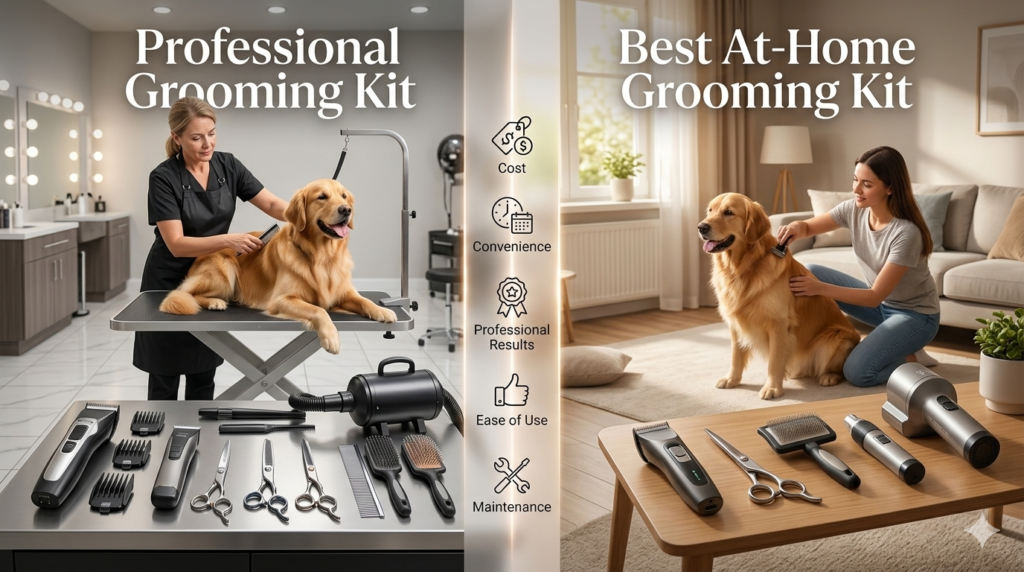
A professional dog grooming kit is typically built for groomers working on multiple dogs back-to-back, day after day. These kits tend to feature:
- Higher-torque, heavy-duty motors built for continuous use
- Interchangeable blade systems compatible with a wide range of blade sizes
- Rugged housings designed to handle drops, repeated cleaning, and daily wear
- Higher price points reflecting commercial-grade components
The best at-home dog grooming kit, on the other hand, is built around occasional use – typically every few weeks rather than several times a day. These kits prioritize:
- All-in-one convenience, with clippers, combs, nail tools, and brushes in one box
- Lighter weight and quieter operation for pets unfamiliar with the sound
- A price point suited to single or multi-pet households
- Simple, beginner-friendly controls
So which do you actually need? If you have multiple dogs, a breed with a thick double coat that needs frequent attention, or you simply groom very often, a more durable, professional-style kit can be worth the higher price tag in the long run. For most households grooming one or two dogs every month or so, a well-built at-home kit handles the job comfortably.
Which Type of Dog Grooming Kit Matches Your Needs?
Best for First-Time Owners
If you’re new to grooming at home, look for a straightforward kit with a quiet motor, a handful of clearly labeled guide combs, and simple instructions. Skip kits packed with specialty attachments you won’t use right away – simplicity shortens the learning curve.
Best for Thick or Double-Coated Breeds
Breeds like Huskies, Golden Retrievers, Australian Shepherds, and Corgis shed heavily and do best with kits that have higher-torque motors, durable blades rated for dense coats, and an included undercoat rake or deshedding comb.
Best for Small Breeds and Puppies
Smaller dogs and puppies do best with lightweight, low-vibration clippers and rounded-tip trimmers, which lower the risk of nicks around delicate areas like the ears, paws, and tail.
Best for Multi-Dog Households
If you’re regularly grooming several dogs, look for something closer to professional-grade: longer battery life or corded operation, interchangeable blades, and a build quality that can handle frequent use without overheating.
Best Budget-Friendly Option
A budget-friendly kit doesn’t have to mean a low-quality one. Focus first on the core clipper’s motor and blade quality, then check whether the included extras – combs, nail tools, brushes – are genuinely useful rather than just filler. A solid warranty or return policy adds peace of mind at this price point.
Pros and Cons of Grooming Your Dog at Home
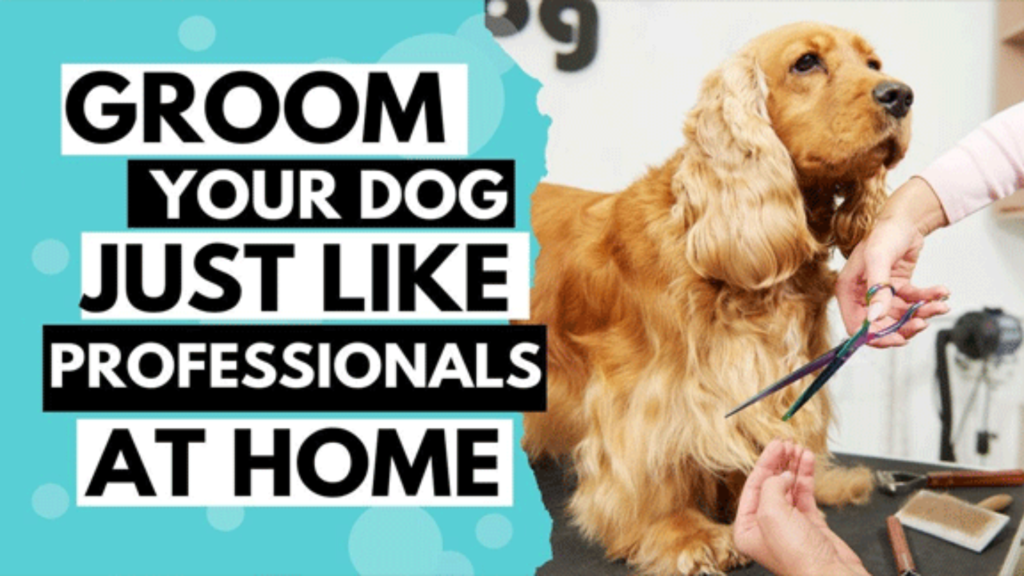
Like any purchase, even the best dog grooming kit comes with trade-offs. Here’s an honest look at both sides.
Pros
- Long-term savings compared to repeated professional grooming visits
- Flexible scheduling – groom whenever works for you and your dog
- Less stress for anxious dogs, since grooming happens in a familiar space
- More control over products, which helps dogs with skin sensitivities or allergies
- Early detection of lumps, ticks, hot spots, or skin issues during regular handling
- Bonding time built into a normal routine
Cons
- A learning curve – early sessions may be slower or less even than a salon cut
- Time commitment, especially for larger or thicker-coated dogs
- Upfront cost for a kit that’s actually worth using
- Ongoing maintenance – blades need regular cleaning, oiling, and occasional replacement
- Limits for breed-specific show cuts, which often still call for a professional groomer’s skill
What to Avoid When Buying a Dog Grooming Kit
Even when you’re focused on finding the best dog grooming kit, it’s easy to get swayed by flashy packaging or a long list of “free” extras. Here’s what experienced owners tend to steer clear of.
Avoid Ultra-Cheap, Unbranded Clippers
Extremely low-cost, no-name clippers often pair weak motors with dull blades that pull fur rather than cut it cleanly – uncomfortable for your dog and frustrating for you. If a “complete kit” price looks too good to be true, check reviews carefully before buying.
Avoid Kits With Fixed-Length Blades Only
If a clipper can’t adjust its cutting length and depends entirely on one or two snap-on guards, you’ll be stuck when coats change with the seasons or when working on different parts of the body.
Avoid Ignoring Noise and Vibration
A kit that looks impressive on paper can still be a poor fit if your dog associates loud or buzzy tools with stress. Look for mentions of “quiet operation” or low-vibration motors, especially if your dog is noise-sensitive.
Avoid Overlooking Motor Cooling and Run Time
Thick or matted coats put real strain on a clipper’s motor. Kits with no mention of cooling features or recommended rest breaks may overheat mid-session, which is both a safety concern and an unwelcome interruption.
Avoid Skipping Blade Maintenance Tools
If a kit doesn’t include a cleaning brush and blade oil, plan to buy them separately. Dull, dirty blades are one of the most common reasons grooming kits get poor reviews – not because the tool is bad, but because it wasn’t maintained.
Avoid “One Kit Fits All Breeds” Claims
Be cautious of kits marketed as a universal solution for every coat type. A kit designed for a Chihuahua’s fine coat and one designed for a Bernese Mountain Dog’s dense double coat have very different requirements. Match the kit to your dog, not the marketing copy.
Real-Life Scenarios: How the Right Kit Makes a Difference
The Heavy Shedder
A Golden Retriever owner was booking a grooming appointment every few weeks just to keep up with shedding season, and the costs were adding up fast. After switching to a kit with a higher-torque motor and a built-in deshedding tool, they were able to manage most of the coat maintenance at home, cutting back on professional visits while keeping the coat healthy and mat-free.
The Multi-Dog Household
A family with three dogs – a small terrier mix, a medium-sized Labrador, and a large Shepherd – found that a basic kit wore out quickly under frequent use. Upgrading to a more durable, professional-style kit with interchangeable blades and longer battery life solved the problem, since one set of tools could now handle all three dogs without overheating between sessions.
The Nervous Rescue Dog
A newly adopted rescue dog reacted strongly to the sound of standard clippers. By switching to a quieter, low-vibration model and introducing it gradually – letting the dog see and hear the clippers running nearby before any contact – the owner built up tolerance over a few short sessions, eventually completing full grooming sessions without distress.
How to Use Your Dog Grooming Kit Safely and Effectively
Even the best dog grooming kit works best when paired with the right technique. Keep these steps in mind for smoother sessions:
- Brush first. Remove tangles and loose fur before clipping so the blade doesn’t snag on mats.
- Introduce the sound gradually. Let your dog hear and see the clippers running nearby before they touch the coat.
- Work with the grain first, then go against the grain for a closer, more even finish on thicker coats.
- Choose the right guard length for the season and area of the body – shorter for warm months, longer for sensitive skin or winter coats.
- Take breaks to let the motor cool, especially on thick or matted coats.
- Save sensitive areas for last – ears, paws, tail, and face benefit from rounded-tip trimmers and a slow, patient approach.
- Reward throughout the session, not just at the end, to keep the experience positive.
- Clean and oil the blades after every use to extend their lifespan and keep future cuts smooth.
And if you notice anything unusual while grooming – lumps, redness, or signs of discomfort – it’s worth checking in with your veterinarian.
Conclusion
Choosing the best dog grooming kit isn’t about grabbing the most expensive option or the one with the longest accessory list – it’s about matching motor power, blade quality, noise level, and included tools to your dog’s coat type and your household’s grooming routine. Whether you go with a budget-friendly all-in-one set or invest in a professional dog grooming kit built for frequent use, the features covered here – motor type, blade adjustability, noise levels, battery life, and maintenance accessories – are what separate a kit you’ll actually keep using from one that ends up forgotten in a drawer.
If this guide helped you feel more confident about finding thebest at-home dog grooming kit for your pet, let us know in the comments – we’d love to hear your dog’s breed and any grooming tips that have worked for you. Share this guide with a fellow pet owner who’s thinking about grooming at home, and check out our other pet care guides for more practical, no-fluff advice.
Frequently Asked Questions
What is the best dog grooming kit for beginners?
Look for an all-in-one kit with a quiet, lightweight clipper, a few clearly sized guide combs, basic nail tools, and simple instructions. For first-timers, simplicity and low noise matter more than having every possible accessory.
How often should I groom my dog at home?
It depends on coat type. Short-haired breeds often do fine with grooming every six to eight weeks, while double-coated or fast-growing coats may need attention every two to four weeks, especially during shedding season.
Is a professional dog grooming kit worth it for home use?
If you have multiple dogs, a breed that needs frequent grooming, or you groom often enough that basic kits wear out quickly, the extra durability and power of a professional-style kit can pay off over time.
Can I use human hair clippers on my dog?
It’s not recommended. Human clippers aren’t built for the density of dog fur and can overheat quickly, which is uncomfortable for your pet and shortens the life of the clippers.
How do I maintain my dog grooming kit?
Clean the blades after every session with a small brush, apply blade oil regularly, store the kit somewhere dry, and avoid leaving batteries fully drained for long periods.
My dog is terrified of the clippers. What should I do?
Start slow. Let your dog get used to the sound and vibration with no cutting involved at first, use treats to build a positive association, and choose a quieter, low-vibration clipper if possible. For dogs with severe anxiety, a quick consultation with a professional groomer or trainer can help.