
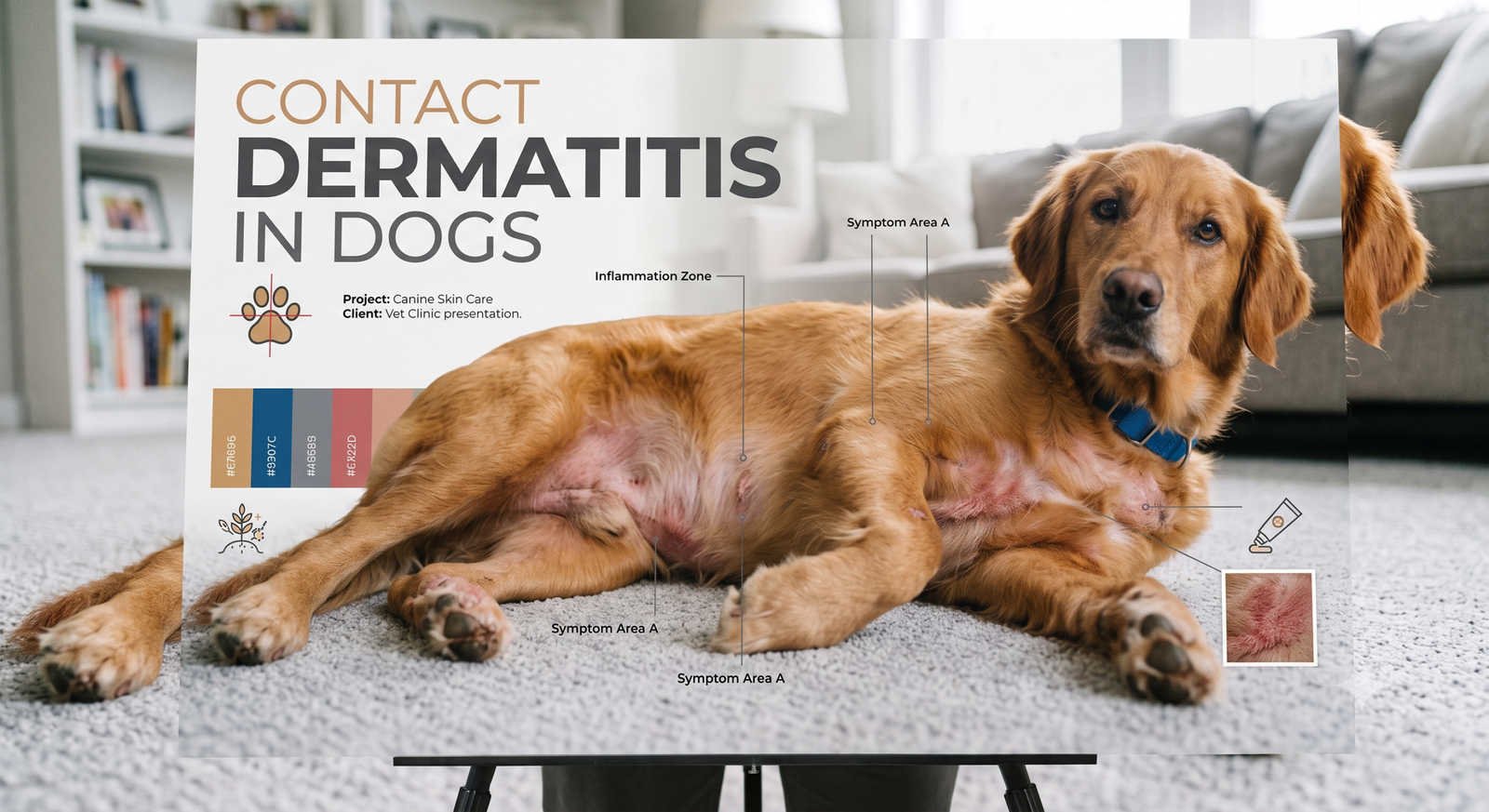
Contact dermatitis in dogs is one of the most common skin conditions veterinarians encounter in clinical practice. If you’ve noticed your furry friend scratching, licking, or biting at their skin excessively, they might be suffering from this uncomfortable condition. Unlike some genetic skin disorders that dogs are born with, contact dermatitis develops when your dog’s skin comes into direct contact with irritating or allergenic substances in their environment.
According to recent veterinary dermatology studies, contact dermatitis affects approximately 15-20% of dogs that visit veterinary clinics for skin-related issues. The good news? This condition is manageable, treatable, and often preventable when you understand what causes it and how to protect your dog.
In this comprehensive guide, we’ll explore everything pet owners need to know about allergic contact dermatitis in dogs, from identifying early warning signs to implementing effective treatment strategies. Whether your dog has already been diagnosed or you’re trying to prevent this condition, this article will equip you with practical knowledge to keep your canine companion comfortable and healthy.
What is Contact Dermatitis in Dogs?
Contact dermatitis is an inflammatory skin reaction that occurs when your dog’s skin directly touches a substance they’re sensitive or allergic to. Think of it as your dog’s skin having an immediate or delayed reaction to environmental irritants—similar to how some humans develop rashes from poison ivy or certain fabrics.
Two Types of Contact Dermatitis
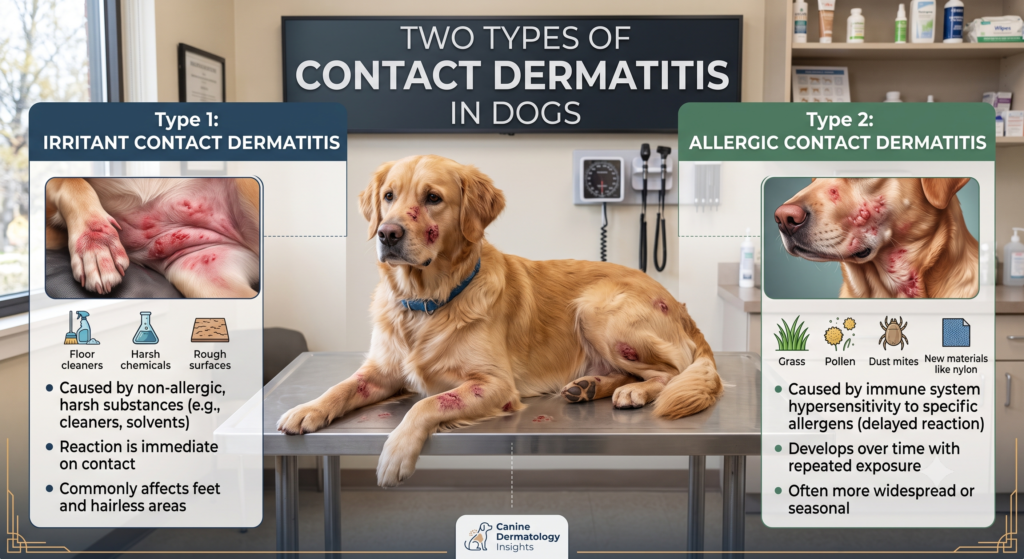
1. Irritant Contact Dermatitis
Irritant contact dermatitis occurs when a substance directly damages the skin’s outer layer. This type doesn’t require prior sensitization and can affect any dog exposed to the irritant long enough. Common irritants include:
- Harsh cleaning chemicals
- Fertilizers and pesticides
- Road salt (common in winter in Northern Europe and North America)
- Caustic substances
- Strong soaps or detergents
2. Allergic Contact Dermatitis
- Nickel and other metals (found in collars and jewelry)
- Rubber products
- Wool
- Certain plants (poison ivy, oak, sumac)
- Preservatives in grooming products
- Latex
Allergic contact dermatitis is an immune-mediated reaction. Your dog’s immune system perceives a normally harmless substance as a threat and triggers an inflammatory response. This type develops only after repeated exposure and sensitization. Common allergens include:
Contact Dermatitis in Dogs: Recognizing the Symptoms
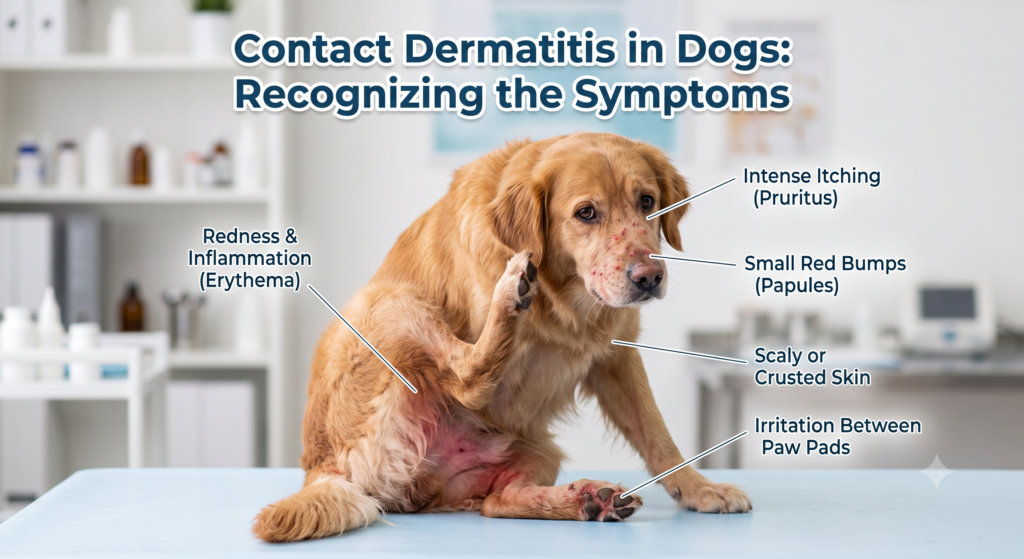
Early recognition of contact dermatitis symptoms can prevent the condition from worsening and reduce your dog’s discomfort. The clinical signs typically appear within hours to days of exposure to the offending substance.
Primary Symptoms
Localized Itching and Irritation
The most noticeable symptom is intense itching concentrated in areas where contact occurred. Most commonly affected areas include:
- Paws and foot pads (especially after walking on treated lawns or salted roads)
- Belly and groin (from lying on irritating materials)
- Face and muzzle
- Ears and ear flaps
- Areas under the collar or harness
Skin Redness and Inflammation
You may notice the skin appears unusually red or inflamed. The affected area might feel warm to the touch and show visible signs of irritation.
Secondary Skin Changes
As your dog scratches and licks, secondary changes develop:
- Hair loss (alopecia) from excessive licking and scratching
- Crusty or scaly patches
- Open sores or raw patches from self-trauma
- Swelling or edema in severe cases
Behavioral Changes
Dogs with contact dermatitis often exhibit behavioral changes due to discomfort:
- Excessive licking or chewing at affected areas
- Reluctance to exercise or play
- Sleep disturbances from nighttime itching
- Anxiety or restlessness
When to Contact Your Veterinarian
Schedule a veterinary appointment if you notice:
- Symptoms that persist for more than a few days
- Rapid worsening of skin condition
- Secondary bacterial or yeast infections
- Signs of systemic illness (fever, lethargy, vomiting)
Common Causes: What Triggers Contact Dermatitis in Dogs?
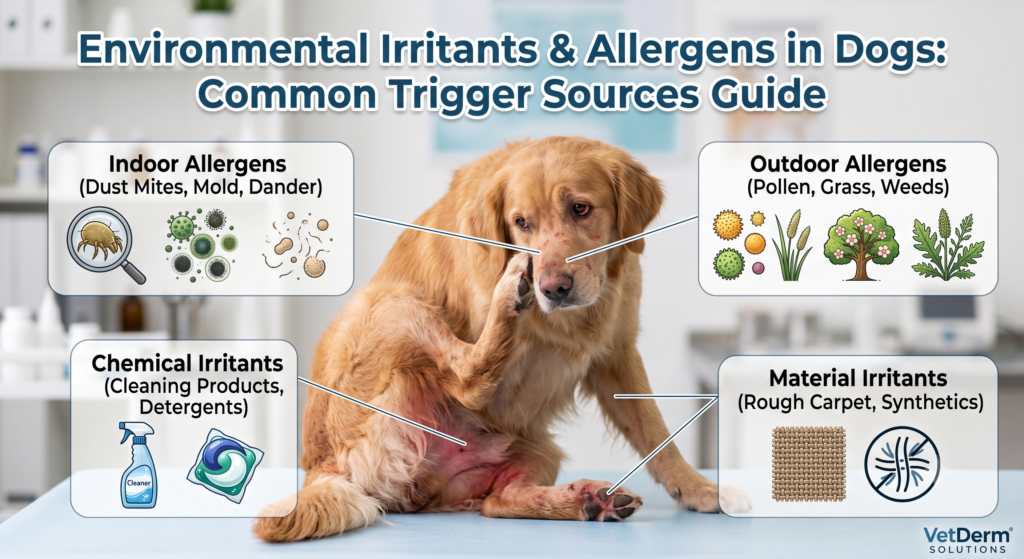
Understanding what causes allergic contact dermatitis in your specific dog is crucial for prevention and management. Individual sensitivities vary significantly, but certain substances are notorious culprits.
Environmental Irritants and Allergens
Chemicals and Cleaning Products
Many household and yard care products contain harsh chemicals that irritate or sensitize dog skin:
- Phenolic disinfectants
- Bleach-based cleaners
- Insecticides and herbicides
- Fertilizers containing chemical irritants
- De-icing salts used on roads and driveways
Plants and Natural Substances
Contrary to popular belief, “natural” doesn’t always mean safe for dogs:
- Poison ivy, oak, and sumac
- Certain flowering plants
- Citrus oils and limonene (used in some flea treatments)
- Tea tree oil (toxic in concentrated forms)
Grooming and Personal Care Products
Contact dermatitis treatment often requires identifying problematic grooming products:
- Harsh shampoos with sulfates
- Fragranced conditioners
- Flea and tick treatments (especially those with pyrethrin or permethrin)
- Grooming wipes containing alcohol or perfumes
- Medicated shampoos your dog is sensitized to
Collar and Accessory Materials
One frequently overlooked cause is the collar itself. Dogs can develop allergic contact dermatitis to:
- Nickel or other metals in collar hardware
- Rubber components
- Latex
- Dyes in fabric collars
- Plastic materials
Flooring and Bedding Materials
Your home environment plays a significant role:
- New carpet or rugs treated with chemicals
- Freshly cleaned floors (from cleaning products)
- Bedding made with dyes or irritating materials
- Plastic food and water bowls containing BPA or dyes
Diagnosis: How Veterinarians Identify Contact Dermatitis
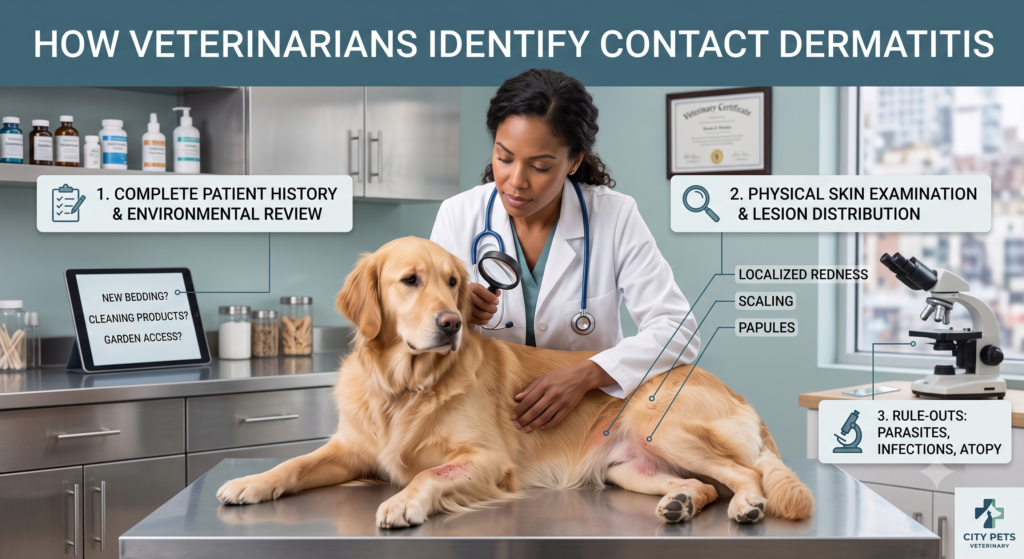
Professional diagnosis is essential because contact dermatitis symptoms often mimic other skin conditions like atopy, food allergies, or bacterial infections.
Veterinary Examination Process
Complete Medical History
Your veterinarian will ask detailed questions:
- When did symptoms first appear?
- Have there been recent changes in environment, diet, or products?
- Which areas are most affected?
- Does the condition improve or worsen with specific activities?
- Have you recently moved homes or changed outdoor routines?
Physical Examination
The vet performs a thorough skin examination, noting:
- Distribution pattern of affected areas
- Presence of secondary infections
- Overall skin condition and coat health
- Lymph node enlargement
Diagnostic Tests
Cytology
Microscopic examination of skin samples helps identify secondary bacterial or yeast infections.
Fungal Culture
Rules out ringworm, which can present similarly.
Intradermal Skin Testing
For suspected allergic contact dermatitis (not irritant), this test involves injecting small amounts of potential allergens and observing reactions—though this is more commonly used for inhalant allergies.
Elimination Trials
The most practical diagnostic approach involves removing suspected irritants and monitoring for improvement over 2-4 weeks.
Dog Contact Dermatitis Treatment: Comprehensive Management Strategies
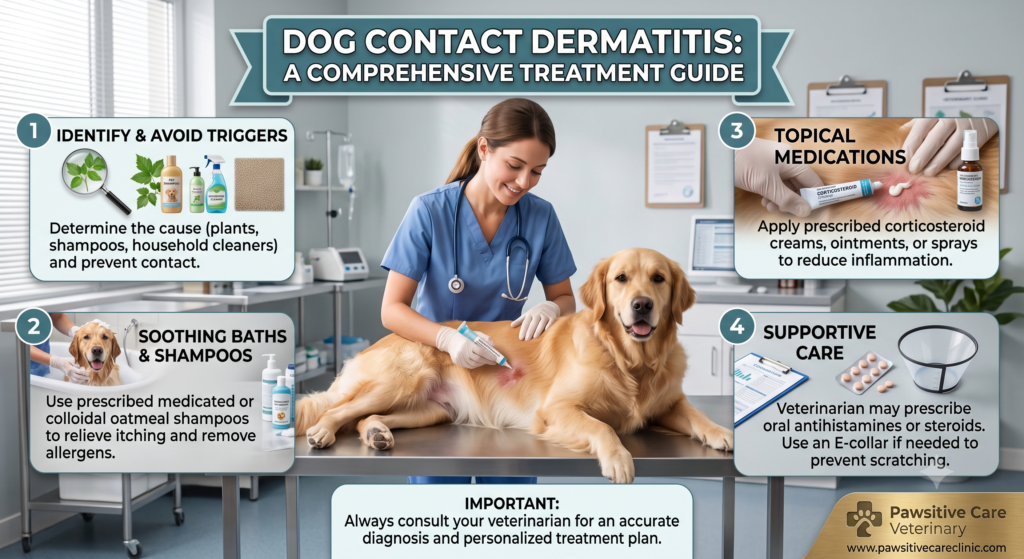
Successful treatment involves both immediate relief and long-term management to prevent recurrence.
Immediate Relief Measures
Remove the Offending Substance
The most effective treatment is identification and removal of the triggering agent. This requires detective work:
- Change collars or harnesses
- Switch grooming products to hypoallergenic, fragrance-free options
- Avoid treated lawns and salted walkways
- Stop using specific flea treatments if suspected
Soothing Baths
Lukewarm baths with medicated or soothing shampoos provide relief:
- Oatmeal-based shampoos (colloidal oatmeal is particularly soothing)
- Hypoallergenic shampoos without dyes or perfumes
- Avoid hot water, which worsens inflammation
Topical Treatments
Veterinary-approved topical solutions accelerate healing:
- Hydrocortisone cream or spray for mild inflammation
- Prescription topical corticosteroids for moderate to severe cases
- Antihistamine sprays for temporary itch relief
- Protective bandages for severely affected areas
Systemic Medications
Oral Antihistamines
These help reduce itching and inflammatory responses:
- Cetirizine (Zyrtec)
- Chlorpheniramine
- Diphenhydramine (Benadryl)
Effectiveness varies between individual dogs; some respond excellently while others show minimal improvement.
Oral Corticosteroids
For severe contact dermatitis, short courses of oral corticosteroids provide rapid anti-inflammatory effects:
- Prednisone
- Dexamethasone
- Typically prescribed for 7-14 days
Important consideration: Long-term corticosteroid use carries risks, so veterinarians prefer the shortest effective duration.
Managing Secondary Infections
Excessive scratching often leads to bacterial or yeast infections requiring treatment:
- Antibiotic ointments or oral antibiotics for bacterial infection
- Antifungal shampoos or medications for yeast overgrowth
- Regular skin monitoring
Long-term Management
Environmental Modifications
Prevent future episodes through strategic home and lifestyle changes:
- Use pet-safe cleaning products
- Apply pet-safe ice melt instead of rock salt
- Select collars made from hypoallergenic materials
- Choose natural or minimally processed grooming products
- Wash dog bedding frequently in fragrance-free detergent
Protective Measures
Consider preventative strategies:
- Booties for protection from road chemicals and irritants
- Protective clothing when visiting treated areas
- Regular paw soaking in clean water after outdoor exposure
Pros and Cons of Different Treatment Approaches
| Treatment | Pros | Cons |
| Environmental Removal | Most effective; addresses root cause; no medication side effects | Requires identifying correct trigger; time-consuming detective work |
| Topical Corticosteroids | Fast acting; safe for short-term use; localized effect | Not practical for widespread dermatitis; may cause skin atrophy with prolonged use |
| Oral Antihistamines | Minimal side effects; can be used long-term; safe profile | Variable effectiveness; slower action than corticosteroids |
| Oral Corticosteroids | Rapid, profound anti-inflammatory effect; effective for severe cases | Risk of side effects with long-term use; requires monitoring |
| Protective Measures | Prevents recurrence; no medication required; cost-effective | Requires lifestyle adjustments; may be impractical for active dogs |
| Elimination Diet | Rules out concurrent food allergies | Time-consuming; may not reveal all triggers if contact allergen is concurrent |
Frequently Asked Questions About Contact Dermatitis in Dogs
Q: Can contact dermatitis in dogs be prevented?
A: Yes, largely. Once you identify your dog’s specific triggers, prevention involves avoiding exposure. Use protective gear (booties, clothing), choose hypoallergenic products, and maintain a clean, chemical-free living environment. However, if your dog develops true allergic contact dermatitis, they’ll remain sensitive to that substance indefinitely.
Q: Is contact dermatitis contagious?
A: No. Contact dermatitis is not contagious between dogs or to humans. It’s an individual skin reaction, not an infectious condition.
Q: How long does it take for contact dermatitis to resolve?
A: Timeline varies based on severity and trigger removal. Mild cases may resolve within days of eliminating exposure, while moderate cases typically improve within 2-4 weeks. Severe cases with secondary infections may require 6-8 weeks for complete resolution.
Q: Can I use home remedies for contact dermatitis?
A: Some home remedies provide comfort but shouldn’t replace veterinary care:
- Safe options: Lukewarm oatmeal baths, plain coconut oil (avoid ingestion)
- Avoid: Essential oils, harsh soaps, human medications without veterinary guidance
Always consult your veterinarian before using home treatments, especially if secondary infection is present.
Q: Does contact dermatitis get worse over time?
A: Without intervention, yes. Continued exposure to the trigger causes worsening inflammation. Secondary infections from scratching can complicate the condition. Early identification and removal of the offending substance prevents progression.
Q: Can my dog develop contact dermatitis to something they’ve used for years?
A: Absolutely. Allergic sensitization can develop over time with repeated exposure. Your dog might tolerate a product for months or years before developing an allergy. This is why contact dermatitis sometimes appears without obvious recent changes.
Prevention: Protecting Your Dog’s Skin Health
Preventive Best Practices
1. Choose Quality Grooming Products
- Select hypoallergenic, fragrance-free shampoos and conditioners
- Look for products specifically formulated for sensitive skin
- Patch test new products on a small area first
- Avoid products containing known irritants (sulfates, parabens, dyes)
2. Optimize Your Home Environment
- Use pet-safe cleaning products (vinegar, baking soda, hydrogen peroxide)
- Avoid excessive chemicals in yard treatments
- Wash dog bedding weekly in fragrance-free detergent
- Consider air purification to reduce environmental irritants
3. Manage Outdoor Exposures
- Use dog booties on salted or chemically treated surfaces
- Rinse paws with clean water after outdoor exposure
- Avoid freshly treated lawns and gardens
- Limit exposure to plants known to cause contact dermatitis
4. Proper Collar and Gear Selection
- Choose collars from hypoallergenic materials (soft fabric)
- Ensure collars fit properly (not too tight)
- Rotate between different collar types
- Inspect metal hardware for rust or deterioration
5. Regular Health Monitoring
- Perform weekly skin checks
- Monitor for signs of itching or inflammation
- Maintain regular grooming to catch early skin changes
- Schedule annual veterinary check-ups
Key Takeaways: Managing Your Dog’s Contact Dermatitis
- Contact dermatitis is common and manageable when properly diagnosed and treated
- Identification of the trigger is crucial for long-term success
- Environmental modification often proves more effective than medication alone
- Early intervention prevents secondary infections and worsening inflammation
- Prevention strategies significantly reduce recurrence rates
- Individual dogs react differently to treatments—work with your veterinarian to find optimal solutions
- Patience and consistency in management produce the best outcomes
When to Seek Veterinary Care
Contact your veterinarian if your dog exhibits:
- ✓ Persistent itching or skin irritation lasting more than 3-5 days
- ✓ Signs of secondary infection (pustules, oozing, foul odor)
- ✓ Severe inflammation or swelling
- ✓ Systemic symptoms (fever, lethargy, loss of appetite)
- ✓ Lack of improvement after eliminating suspected triggers
- ✓ Symptoms spreading to previously unaffected areas
Conclusion
Contact dermatitis in dogs is frustrating for both pets and their owners, but the silver lining is that it’s often preventable and highly treatable. The key to success lies in careful observation, working closely with your veterinarian, and maintaining consistency in management strategies.
Your dedication to understanding your dog’s skin health makes all the difference. By learning to recognize early warning signs, identifying triggers, and implementing preventative measures, you can dramatically improve your dog’s quality of life and comfort.